
European Championships Head to Riga for the First Time


Choose a language
 Français
 Deutsch
 Español
 Italiano
 Português
 Nederlands
 Русский
 中文
中文
 Türkçe
 Dansk
Dansk
 Svenska
 Norsk
Norsk
 हिन्दी
For the first time in its history, the European bridge elite is heading to Riga, the capital of Latvia. Despite its modest size, the Baltic nation boasts a strong bridge tradition, and its active federation has recently gained experience hosting major international events. Last year, it organized the European Champions’ Cup in the seaside resort of Jurmala on the Gulf of Riga, while the 2024 European Small Federations Championship was held at the same venue.
The Programme
The action begins with the European Women’s, Seniors’ and Mixed Pairs Championships, taking place from 27 to 30 June.
The flagship event, the 57th European Team Championship in the Open category, also gets underway on 27 June and runs through 7 July.
Meanwhile, the European Women’s, Seniors’ and Mixed Team Championships will be contested from 1 to 7 July, making for a packed schedule of top-level bridge.
The Format
Thirty teams will compete in the Open Teams Championship. Each team faces all 29 opponents once, with every match consisting of 16 boards and no halftime break. After a total of 464 boards, the team leading the standings will be crowned European champion.
Success requires maximising results against lower-ranked opponents while maintaining a positive record against fellow contenders. At the 2024 European Championships in Herning, Norway achieved exactly that. The eventual champions scored at least 14 out of 20 Victory Points in half of their matches and suffered only six defeats, none by a large margin, finishing with an average of 14 VP per match. That consistency proved decisive.
The Women’s, Seniors’ and Mixed competitions follow a similar format, with teams playing 21, 23 and 25 matches respectively.
The Contenders
Norway was the dominant force in Herning, Denmark, in 2024, capturing both the Open and Women’s titles. In the Open field, Geir Helgemo and Boye Brogeland will be aiming to defend their crown, but Switzerland, strengthened by its Polish stars and the return of Franck Multon, will be eager for revenge. Several other nations are also capable of challenging for the title in what promises to be an exceptionally strong field.
The Norwegian women, led by Marianne Harding and Anne-Lill Hellemann, will likewise attempt to retain their title. France, which finished less than two Victory Points behind Norway in Herning, will again be among the main challengers, alongside Poland and Türkiye.
In the Seniors category, defending champions the Netherlands will have to contend with strong teams from Poland and France.
The Mixed competition features another defending champion, Israel. Although the team has undergone some changes since 2024, it remains among the favourites. France and Italy are expected to be among its strongest rivals.
Riga: What to See
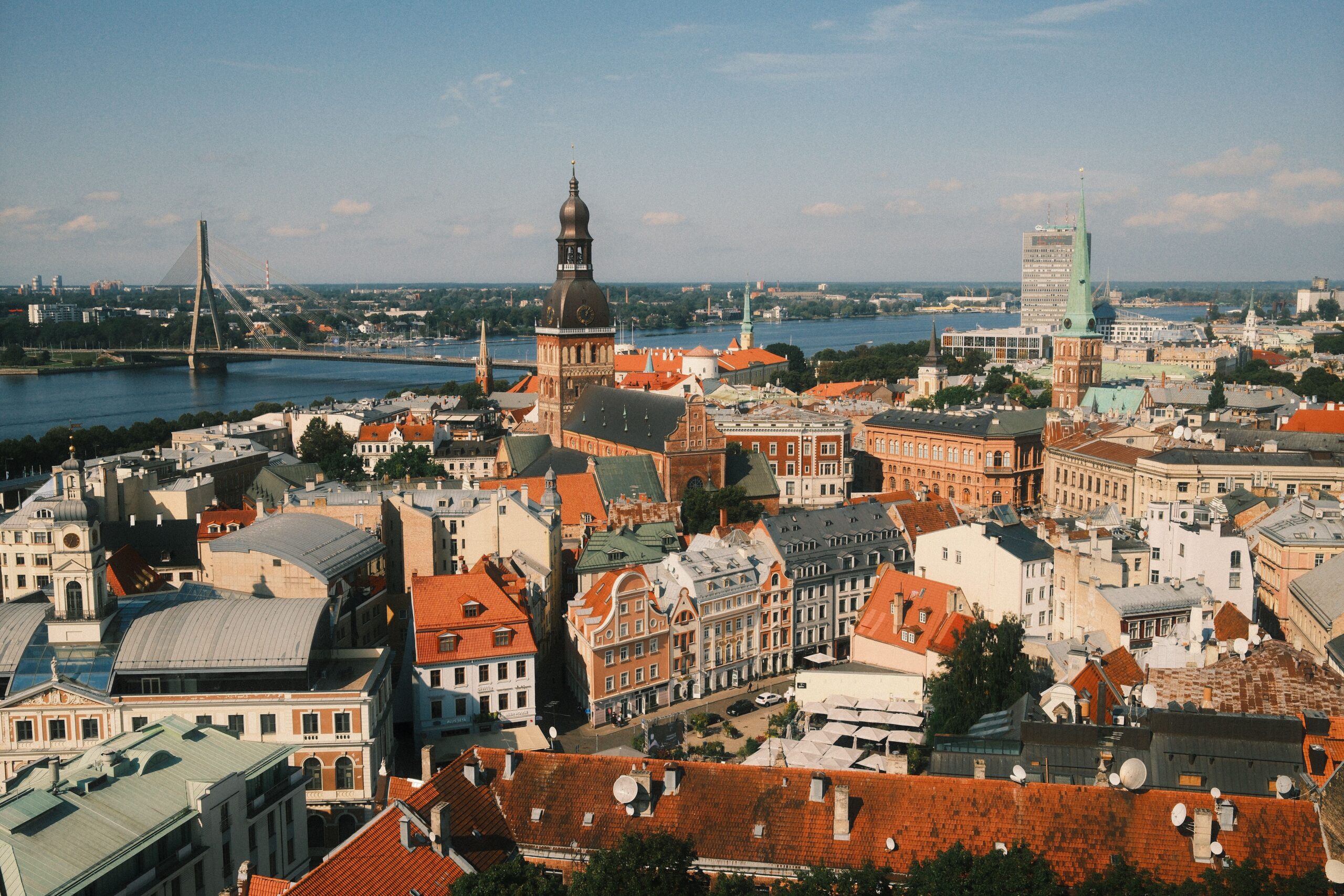
The Old Town (Vecrīga)
A UNESCO World Heritage Site, Riga’s historic centre is known for its medieval streets, the Dome Cathedral with one of Europe’s largest pipe organs, the House of the Black Heads and lively outdoor cafés that remain busy well into the summer evenings. The area is compact and easily explored on foot.
The Art Nouveau District
Riga is home to the world’s highest concentration of Art Nouveau architecture, with around 800 façades. The buildings designed by Mikhail Eisenstein, particularly along Alberta iela, are among the city’s highlights. The Art Nouveau Museum is also worth a visit.
The Central Market
The largest covered market in Europe occupies five enormous former Zeppelin hangars, themselves part of the UNESCO-listed historic centre. Visitors can sample smoked fish, local cheeses, rye bread, beer and flowers from across the region.
Weather
July is high summer in the Baltics. Temperatures typically range from around 18°C at night to 24–26°C during the day, although heatwaves can occasionally push temperatures to 28–30°C. Daylight hours are long, with sunset occurring around 10 p.m. Rain usually comes in the form of short showers rather than prolonged wet weather.






Responses