
Harold Stirling Vanderbilt – The “Gatsby”of modern bridge


Choose a language
 Français
 Deutsch
 Español
 Italiano
 Português
 Nederlands
 Русский
 中文
中文
 Türkçe
 Dansk
Dansk
 Svenska
 Norsk
Norsk
 हिन्दी
PORTRAIT
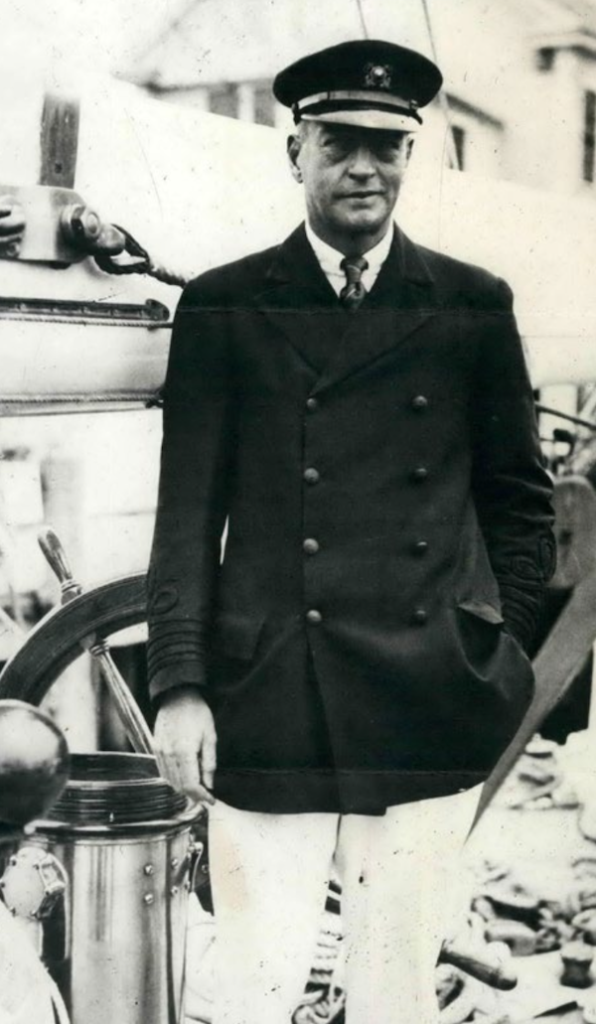
On land and at sea, this railroad businessman and champion sailor developed a passion for bridge, and it was he who invented the modern version of the game in 1925.
Photo: Alamy
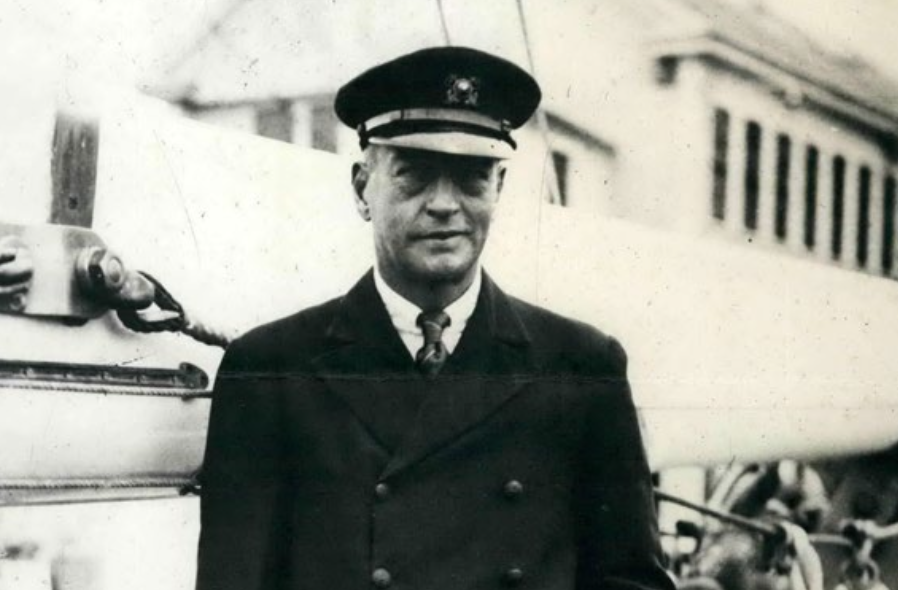
With the elegance of a Fitzgerald hero, his smile and his twinkling eyes immediately charm the camera-lens in the photograph on the cover of Time Magazine, on September the 15th 1930. Harold Stirling Vanderbilt poses proudly on his J-Class racing (sailing) yacht Enterprise, in which he has just carried off the America’s Cup. His left arm resting on his hip gives him a relaxed air, but his right hand is nonetheless on the helm: the “skipper” pursuing his triumphant destiny!
3 America’s Cups
Harold Stirling Vanderbil won three America’s Cups (in 1930, 1934 and 1937).
Forty years later, proof of this appears on the front page of the New York Times, when his death is announced on July the 5th 1970.
On the newspaper’s website the archives read. “Harold Vanderbilt chose three very different main occupations in his active life, and in all three fields he left a profound mark”.
Harold Stirling Vanderbilt, as the inventor of Contract-Bridge, played a decisive role in the history of the game.
(V. Hotchkiss, librarian at Vanderbilt University)
Famous navigator, inventor of modern bridge, and businessman for four decades, Harold Stirling Vanderbilt took three distinct paths, all of which led him to success.
A Family Affair
Born in 1884 in Oakdale, New- York-State, he was the son of Willian Kissam Vanderbilt and the billionaire feminist Alva Erskine Smith. At that time, the Vanderbilts already enjoyed great fame. His great-great-grandfather, the entrepreneur Cornelius Vanderbilt, was a railway and shipping magnate. He is still remembered today as one of the richest men of all time. Vanderbilt University in Nashville Tennessee was established in 1873 with a million dollar endowment from this family patriarch.
From birth, the destiny of his great-great grandson in the world of business was already all mapped out. After getting his law-degree from Harvard in 1910 Harold Stirling Vanderbilt joined the most emblematic of the many family businesses: the New York Central Railroad Company. Ten years later when his father died he, of course, inherited an immense fortune.
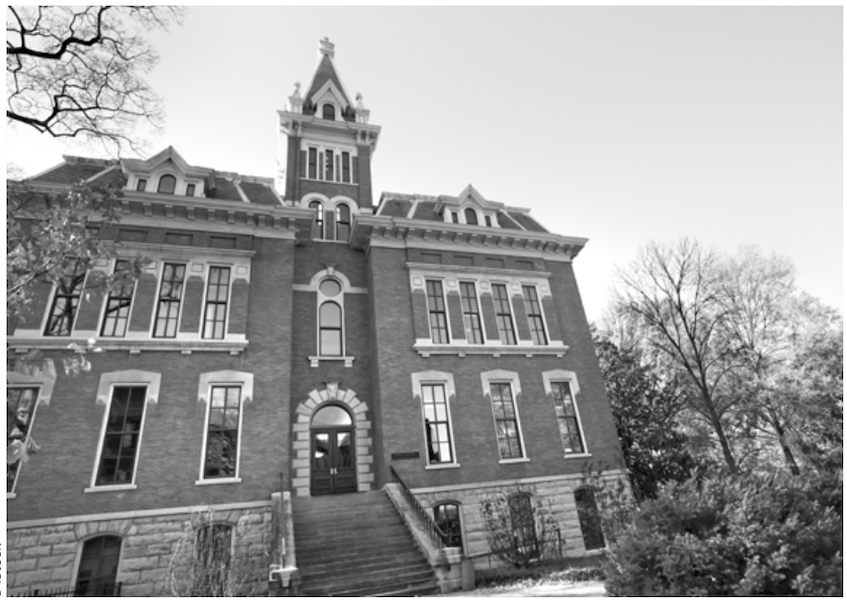
Photo iStock
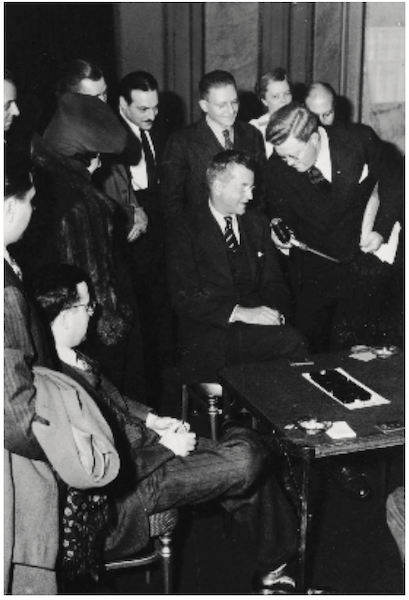
Photo ACBL
In 1925 this man, nicknamed “Mike”, became owner of a luxurious property in Palm Beach, built by the architect Addison Mizner, who was famous for imposing his neo-Spanish style across South Florida. Mizner christened the place “El Solano” after the burning wind blowing over Spain from Africa, and as a wink towards Solano County in California, where he was born. Harold Stirling gave many grand receptions in this luxurious mansion, which in 1980, would be bought by John Lennon and Yoko Ono.
Vanderbilt Trophy
Players come from around the world compete in the Vanderbilt Trophy every spring, in one of the three U.S. Nationals. It was created in 1928 by Harold himself, who won it twice!
Wind in the Sails
Harold Stirling Vanderbilt not only reigned supreme in the business community, his name is also etched in the history of sailing. Between 1922 and 1938 he won numerous awards: six King’s Cups, five Astor Cups and above all three America’s Cups. In 1934 and 1937, his wife Gertrude Lewis Conaway Vandebilt with whom he had no children, was one of the first women allowed to participate in the America’s Cup.
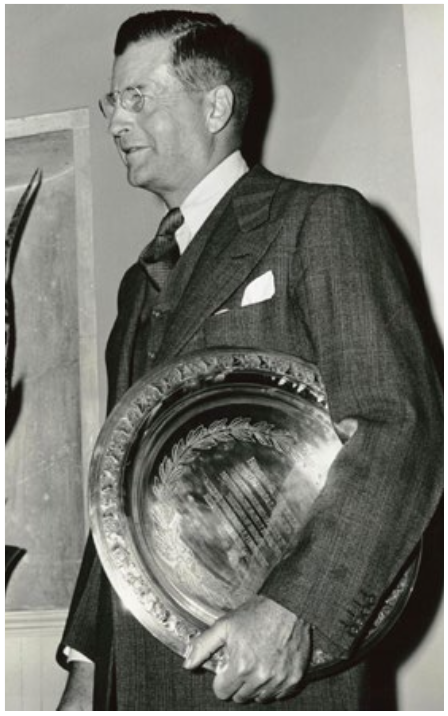
Vanderbilt is rewarded for his contribution to the development of bridge.
Photo ACBL
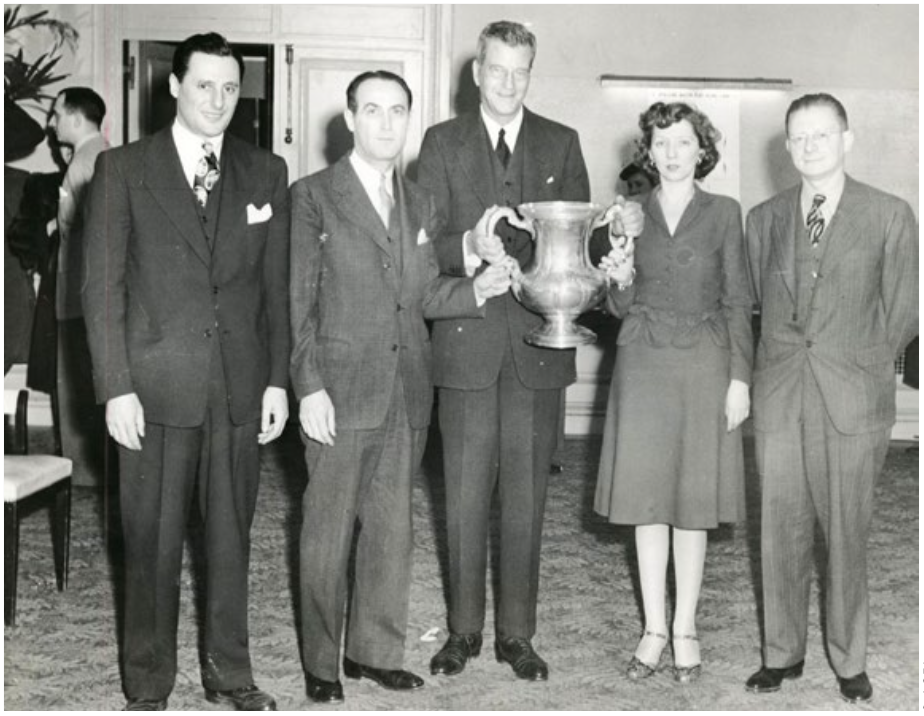
Vanderbilt shows his trophy to Silodor, Goren, Helen Sobel-Smith and Becker.
Photo ACBL
His exploits at sea were not limited to the three regatta trophies alone. In 1925 during a cruise from Los Angeles to Havana, aboard the SS Finland, he invented “contract” bridge.
Harold Stirling Vanderbilt became so passionate about the game of bridge that he introduced new rules, most notably the idea of vulnerability, thus giving birth to the current version of the game. The book Bridge for Dummies, in it’s 2011 edition, goes back to the origins of this discovery. “He was trying to find precisely the right term for the fact that the side who had scored up a game might lose larger penalties as a result. A young lady on the boat looking on (the Yiddish term for a looker-on is a Kibitzer) suggested “vulnerable” as the answer. Vanderbilt adopted her suggestion and it is solemnly recorded that this is the first and last time that a kibitzer has ever made a useful suggestion!” In this way the businessman and sailor acquired a new title; “the Father of Modern Bridge”.
Cheers!
A cocktail has been named in his honor; the Stirling Punch which is based on rum with a dash of whisky. To be mixed with a lot of fruit juice…
Timeless Icon
If Harold Stirling Vanderbilt’s fame during his lifetime was partly based on his family name, his multiple prowess’s in sailing and his innovations in bridge have perpetuated his memory up to this day. On August the 25th 2017, Vanderbilt University – of which he was president for thirteen years – proudly announced on its website the acquisition of “extraordinary” background material, a fabulous collection of books about card-play, games of chance, and chess. It was the “George Clulow and United States Playing Card Co. Gaming Collection”, made up of a thousand volumes, the oldest of which date back to the 15th century. For university librarian Valerie Hotchkiss: “it is [….] entirely appropriate for Vanderbilt to house this collection because one of our great figures, Harold Stirling Vanderbilt, as the inventor of contract-bridge, played a decisive role in the history of the game”.
In the centre of Manhattan, the Intercontinental New York Barclay hotel has christened one of its suites the “Harold S Vanderbilt” penthouse. Located on the 16th floor it offers breathtaking views over the mythical skyscrapers of Midtown Manhattan. At only $35000 per night…
Half a century after his death Harold Stirling Vanderbilt, more than ever, remains synonymous with prestige.



Responses