Basics:
Object, setup, players
Learn the core principles: the goal, the setup, and who plays what.
Bridge may seem complex, four players, two partnerships, bidding, tricks… but once you understand the basics, everything starts to make sense. Let’s break it down step by step.
🎯 The Object of the Game
At its heart, bridge is a trick-taking card game.
Your goal? Work with your partner to win more tricks than your opponents, based on a “contract” you agree on during the bidding phase.
- A trick = each player plays one card. The highest card (within the suit led, or the trump suit if any) wins the trick.
- A deal = 13 tricks in total, since each player has 13 cards.
- The contract = the number of tricks your team promises to win, plus the suit that will be “trump” (or “no trump”).
If you meet (or exceed) your contract → you score points.
If not → your opponents score instead.
💡 Quick tip:
Think of bridge like a mix between chess and poker, it’s strategic, cooperative, and a bit psychological too!
🧩 The Setup
You only need a standard 52-card deck, no jokers, and four players.
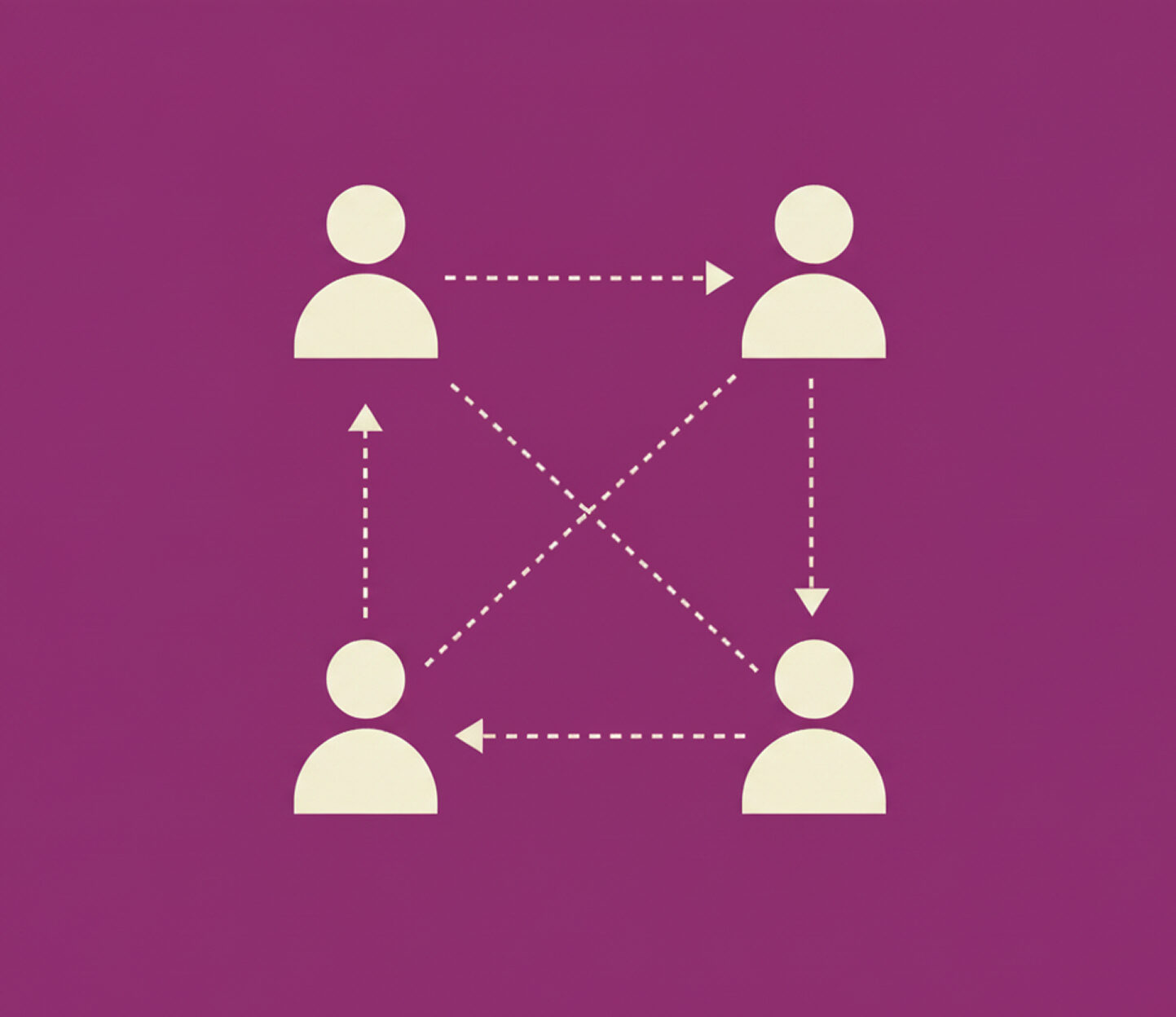
Players sit around the table and form two partnerships:
| Position | Partnership | Example Names |
|---|---|---|
| North | North-South | “Team 1” |
| South | North-South | “Team 1” |
| East | East-West | “Team 2” |
| West | East-West | “Team 2” |
Partners sit opposite each other.
Deal
- Each player receives 13 cards.
- The dealer changes clockwise every hand.
- Cards are dealt one by one (or in small batches).
Play area
- A typical setup includes a bridge table, bidding box, and score sheet (or digital scoring app).
- Online, the platform automates all this, you just focus on the play.
💡 Beginner tip:
Bridge rewards pattern recognition, the more you play, the more natural it feels.
🧍 The Players and Their Roles
Each player has a role that changes depending on the phase of the game.
| Role | When | Description |
|---|---|---|
| Dealer | Start of each hand | Distributes cards and begins the bidding. |
| Declarer | After bidding | The player who first named the final contract’s suit (or notrump). They play both their hand and their partner’s visible cards. |
| Dummy | During play | The declarer’s partner. Once the bidding ends, they lay their cards face up and don’t play actively. |
| Defenders | Always | The opposing team. Their goal: prevent the declarer from fulfilling the contract. |
So even though there are four players, at any given moment the game feels like one team playing against another, two minds working together versus two trying to outsmart them.
🧠 Fun fact:
Bridge is one of the few card games where teamwork and silent communication (through bidding) are essential to success.
Rules summary
♣️ Basics:
Object, setup, players
♦️ Bidding:
How to make a contract
♥️ Play:
Tricks and strategy
♠️ Scoring:
How points are counted
🃏 Conventions:
Standard bidding systems
📖 Glossary:
All the bridge terms
Frequently Asked Questions
Bridge is a trick-taking card game played by four players in two partnerships, where the goal is to work with your partner to win more tricks than your opponents based on the contract agreed in the bidding phase. A trick consists of one card played by each player, and there are 13 tricks in every deal. If your partnership meets or exceeds the contract, you score points; if not, your opponents score instead.
To set up a game of bridge, you need a standard 52-card deck (no jokers) and four players forming two teams: North-South and East-West. Players sit around the table with partners opposite each other. The dealer deals 13 cards to each player, one at a time, and then passes the deal clockwise for the next hand.
In a bridge deal, each of the four players has a role that can change during the game. The dealer distributes the cards and starts the bidding; the declarer is the player who first named the final contract’s suit (or no-trump) and plays both their own hand and their partner’s (the dummy) after the bidding ends; and the defenders are the opposing partnership trying to prevent the declarer from fulfilling the contract.
In next section:
Bidding: How to make a contract